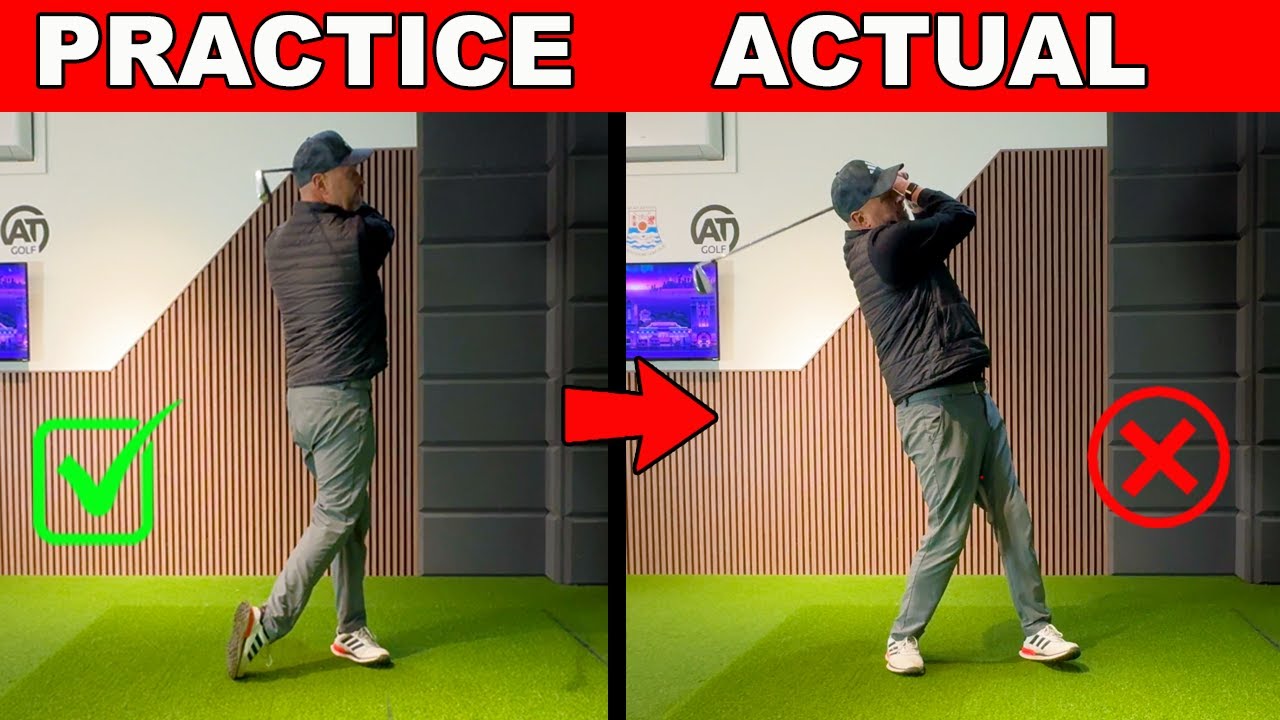
Are you one of those golfers who looks like a tour pro in your practice swing, but when it comes to hitting the ball, everything falls apart? I see it time and time again: a beautiful rehearsal, then a tense, awkward attempt when the ball is in the way. If that sounds familiar, you’re not alone. Let’s break down the five reasons your practice swing never seems to become your real swing – and more importantly, how to fix it.
The Real Difference: Attention on the Ball
Most golfers make a lovely practice swing, focusing on their movement and rhythm. As soon as the ball appears, all that focus shifts. Suddenly, it’s all about the ball, not the swing. The ball is the only real difference between your great rehearsal and your actual shot. My job as a coach is to help you keep your focus on the process, not the ball itself. When you do that, you’ll start to see much better results.
1. Trying Too Hard to Hit the Ball
The biggest killer of a good swing is the urge to "hit" the ball. When you set up for a shot, the temptation is to lash at it, which ruins your movement and timing. Remember, the golf ball isn’t the bottom of your swing arc – it should just be collected as the club travels around your body. Picture your clubhead making a smooth, circular motion, with the ball simply getting in the way at the bottom. Let the swing happen, and the ball will take care of itself.
2. Trying to Get the Ball in the Air
Another classic mistake is the effort to scoop under the ball to launch it skyward. When you try to get under the ball, your weight stays back, you either fat it or thin it, and the results are frustrating. The right movement is to swing back, then move towards your target as you come down, letting the club naturally brush the turf after the ball. Trust your loft and technique – you don’t need to help the ball up.
3. Steering for a Perfectly Straight Shot
Many players become obsessed with hitting the straightest shot possible. The result: a tense, steery, guiding motion, often leading to a weak slice. When you steer, the clubface stays open, and you lose distance and accuracy. Instead, allow the club to rotate naturally, just like swinging a baseball bat. Trusting the release adds speed, squarer contact, and much better results. Next time you’re at the range, hold the club out and swing it like a bat – feel that free rotation, then bring that sensation into your golf swing.
4. Chasing More Distance by Hitting Harder
It’s natural to want to hit the ball further, but the answer isn’t trying to hit harder. When you swing with more effort, tension creeps in, your swing arc gets smaller, and you end up with less power, not more. The goal is to swing the club faster, not harder. Focus on freedom and speed, not brute force. Most golfers actually hit it further when they relax and let the club do the work.
5. Obsessing Over the Sweet Spot
Hitting the centre of the clubface is important, but the way most golfers go about it is counterproductive. Trying to over-control the strike creates tension and inconsistency. Instead, swing freely and trust that, with good fundamentals, the club will naturally find the middle more often. The club wants to create a wide arc – let it happen, and the strike will improve.
The Key: Focus on the Process
If your practice swing is great and your real swing isn’t, the problem isn’t your technique. It’s your attention. Stay focused on making a good swing, not on forcing the ball to do something special. The more you trust the process, the more your real shots will look and feel like your best practice swings.
If you’re struggling to put this into action, online lessons can be a fantastic way to get personal feedback and tailored drills. I offer online coaching through Skillest if you’d like one-to-one guidance to break through these barriers.
Watch the Full Lesson
For a full walkthrough and demonstration of these concepts, watch the complete lesson here. Start turning your practice swing into your real swing, and you’ll be playing your best golf in no time.